The Transplant: From BOLT to neon
A dead prototype, a borrowed toolkit, a hotel bed turned workbench, and the long road to neon.
A dead prototype, a borrowed toolkit, a hotel bed turned workbench, and the long road to neon.
It is an unwritten law of prototypes: they behave perfectly for weeks, in the workshop, on the test loop, in front of anyone who doesn't matter. Then they wait for the one moment that does, and quit. Mine chose Amsterdam.

The $100 question
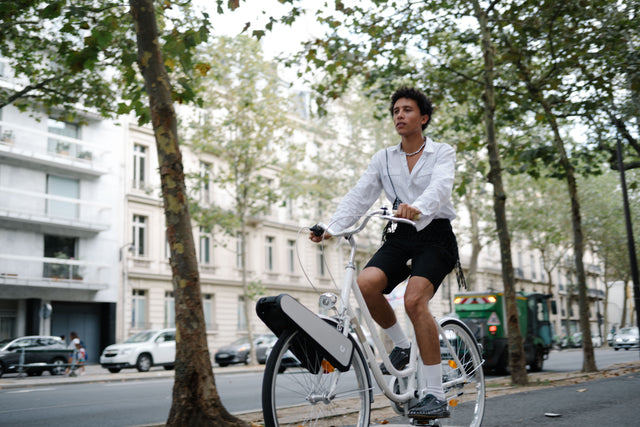
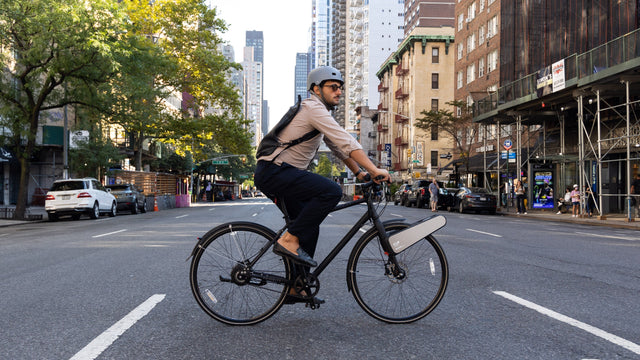
CLIP began, as I have written before, with my own commute in Brooklyn: an uphill ride home, and a wish for a boost I could add to my bicycle on the days I needed it and leave off on the days I didn't. Our first devices, the Commuter and the Explorer, proved the idea on the streets of New York. They were also priced for New York.
What nagged at me was everywhere else. Most of the world's bicycles are ridden by people for whom a five-hundred-dollar upgrade is not a purchase but a fantasy, in cities like Kolkata, where our devices are made. It became the question I couldn't put down: what was the least you could add to a bicycle to make it electric?
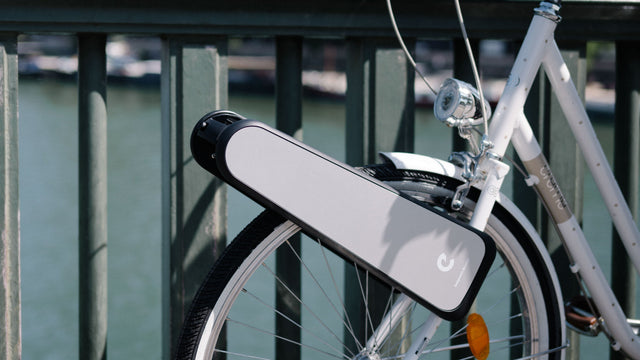
We suspected the answer was a stripped-down CLIP. Much of what you pay for in CLIP is its sleight of hand, the four-second attach and detach that lets it migrate from bike to bike. Remove the trick and the price falls away. The device would no longer clip on in four seconds, but it could be installed in ten minutes, and for someone who rides the same bicycle every day, ten minutes, once, is hardly a sacrifice. We called it BOLT. It cost about a hundred dollars, weighed next to nothing, and used a fraction of the materials of a conventional e-bike.

Amsterdam
Last year, BOLT was accepted into the What Design Can Do accelerator, which meant a workshop in Amsterdam and a presentation at Pakhuis de Zwijger, a former warehouse on the IJ. Amsterdam is a city where the bicycle is not a lifestyle but a utility, like running water, and a hundred-dollar upgrade would have to survive that scrutiny.
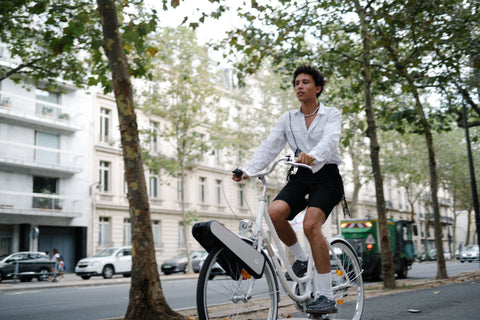
BOLT traveled in my suitcase. At the hotel, I rented one of its bikes, wheeled it up to my room, and fitted BOLT to it there, which was, after all, the point: no new bike, just the one in front of you. Then I switched it on. Nothing.
No power, no assist, not even the courtesy of a flicker. I was in a small hotel room with a rented bicycle, a talk on the calendar, a prototype that had become an expensive paperweight, and not a single tool.
The bed became a workbench
I called Manuel, a dear friend in the city. He lent me his tools. He also, as it happened, owned an older CLIP, and that turned out to be worth more than anything in the toolbox.
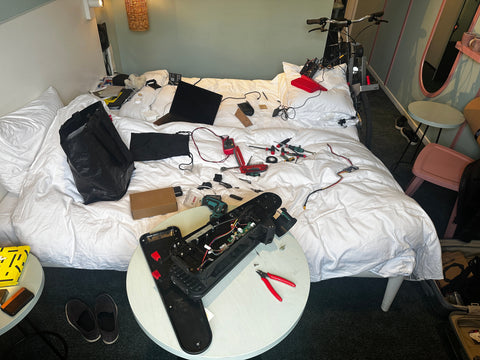
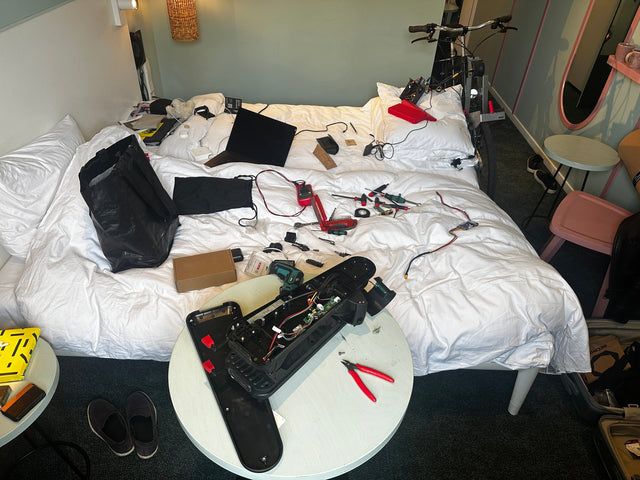
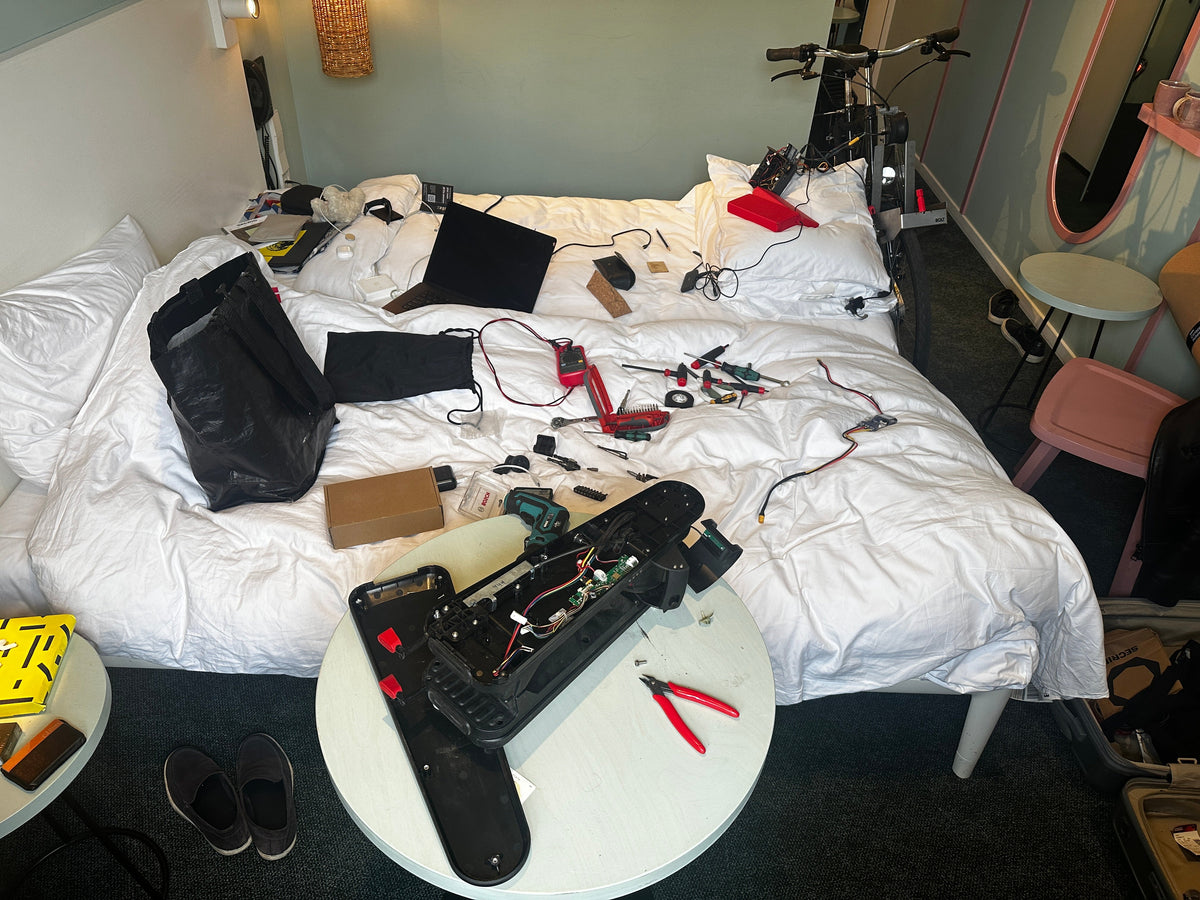
BOLT and CLIP share the same core electronics, which meant I could open both and perform something like an organ transplant: the motor controllers, and the main Bluetooth PCBA, the board that runs the whole system. I laid out the patient and the donor across the duvet and went to work.
It is an old idea, and Honda understood it better than anyone. Share the parts across the range, and every machine becomes a spare for every other. Part of the reason a Honda is so reliable is that the fix is rarely more than a swap.

For three days, the bed was a workbench. A multimeter nested in the folds of the sheets; hex keys lay where the pillows had been; a controller trailed red and yellow wires toward the foot of the mattress. I was aware of how it might look: a brown man alone in a hotel room with a bed covered in unexplained wires, and a Do Not Disturb sign that didn't come down for three days. There are not many innocent explanations for that scene. "I'm fixing an e-bike" is not the first that comes to mind.
On the third day, it woke up. I rode it out of the hotel and across the city to Pakhuis de Zwijger.
The talk

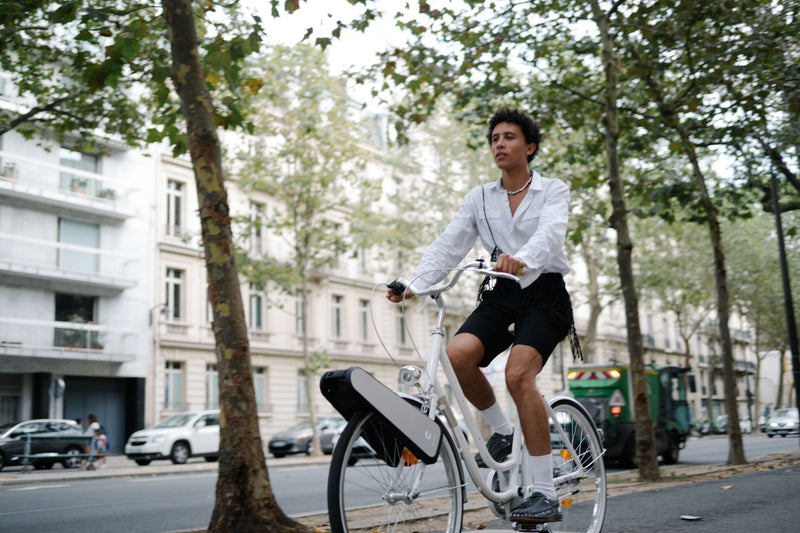
I did not leave it at the bike rack. I rode BOLT into the building, past signs for the Grote Zaal and the IJ-zaal, up to the backstage doors and all the way to the stage, and made the case for a hundred-dollar e-bike upgrade on a device that, three days earlier, had been in pieces on a hotel bed.

That night, I rode it home through Amsterdam, its light glowing on the handlebars. It felt like a small vindication.
What India told us
The hotel room proved that BOLT could be kept alive. Testing in India posed a harder question: could someone live on it?
The people we had built BOLT for were not going to ride it for pleasure. For many of them, it would be a lifeline to their livelihood, something they would need 24x7, rain or shine, mud or asphalt. Friction drive is what makes CLIP small enough to carry, but a motor pressed against a tire is not the best companion for a rider who can't afford a day off when the road turns to slurry.
We knew this. But knowing a thing and acting on it are different matters, and the distance between them is usually a single decision.
The meeting
Ours came in January, at a regular all-hands that I now look back on as the day neon was conceived.
David Krawczyk, our product chief, had been advocating for the hub motor for years, since his days at JUMP bikes and then Uber. In that meeting, he raised it again, this time as a quick way to explore a spinoff. The hub motor is no experiment. It is fully debugged and commoditized, which makes it cheaper, and it has better thermal efficiency than friction drive. And the timing was right: we had just received our UL safety certifications. Put a hub motor at the center and keep every other component exactly as it was: the same electronics, the same batteries, the same supply chain. We would not be starting over. We would be building on everything we had already proved.
Then came the convergence. For a brief second, everyone in the room saw the same future at the same time. The friction-drive years, the stripped-down BOLT, the riders in India, the certification we had just won: all of it suddenly pointed one way. I took the decision almost without any persuasion, because we could all see the future.
We walked out buzzing, David and I already trading ideas. The CLIP logo was neon green. A Dieter Rams monograph lay on a desk, its neon orange looking back at us. Neon: one word, a nod to the product design of the seventies, a name that seemed to glow on its own. The idea had arrived all at once, and so, it turned out, had the name.
neon
That was January. Now we are proud to deliver neon.

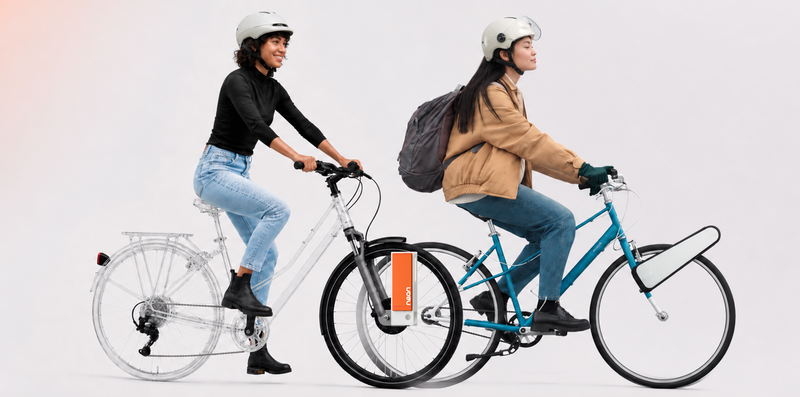
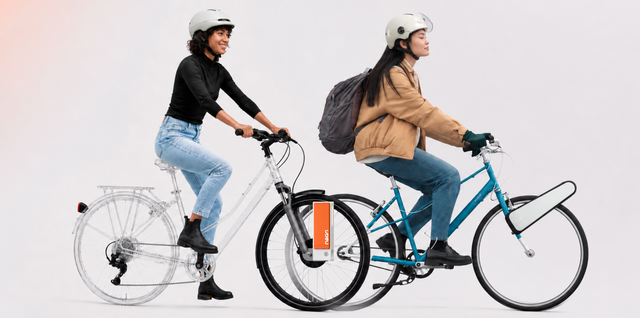
neon converts the bike you already own into an e-bike. You swap the front wheel, and ten minutes later you are riding: the same ten minutes BOLT taught us to accept. A hub motor does the work, built for every day and every surface. Its brain is a removable controller that docks at the hub; its batteries hot-swap. It shares CLIP's electronics and UL certified batteries, and it is made on the supply chain we built in Kolkata.

neon ships in March 2027. Reserve a First edition.
BOLT asked how affordable an e-bike upgrade could be. India asked how tough it had to be. neon is our answer to both.
neon wasn't born in that hotel room. It was born in India, and decided in January. Amsterdam gave me something else: three days that showed me, more clearly than any lab could, what it takes to keep a machine running far from home, and how much a good friendship is worth when you get there.